OpenLens Integrates Built-In AI Agent to Simplify Brand Tracking Across AI Assistants
AI visibility platform OpenLens has announced the release of a built-in AI agent designed to simplify how marketing teams track and report their brand presence within AI assistants. Instead of requiring users to navigate complex data dashboards, the new tool allows professionals to query their AI visibility metrics using plain language and receive synthesized, direct answers.
The new agent, which is accessible from any project inside the platform, can compile answers in seconds. It is capable of generating fully styled, downloadable deliverables in PDF, Word, and PowerPoint formats. This allows marketers to quickly produce client-ready or executive-level presentations without manual data compilation.
Conversational Queries Over Complex Dashboards
Traditionally, monitoring brand performance in AI models required manual exploration of dashboards to parse prompts, tracking setups, and data runs. OpenLens aims to bypass this friction by allowing users to simply ask conversational questions such as "How did our visibility change this month, and why?"
The AI agent scans all relevant data within a project—including brands, runs, and prompts—to generate a clear, comprehensive summary. According to Cameron Witkowski, Co-Founder of OpenLens, the update addresses a key friction point for marketing teams. Witkowski noted that teams should not have to be dashboard specialists to comprehend how AI platforms are referencing their brands. With the new agent, users can simply ask their questions, and the system handles the deep data exploration to deliver polished reports.
A Collaborative, Analyst-Like Workflow
To prevent errors and ensure accuracy, the AI agent is programmed to mirror the cautious workflow of a human analyst. When presented with unclear or ambiguous queries, the agent does not make assumptions. Instead, it prompts the user with clarifying questions to define the request.
Furthermore, users retain control throughout the process. They can redirect the agent's focus while it is actively working, and the tool will consistently seek approval before initiating any changes to a project. All generated documents and reports belong entirely to the user and are available for download.
Blending Classic Search with AI Insights
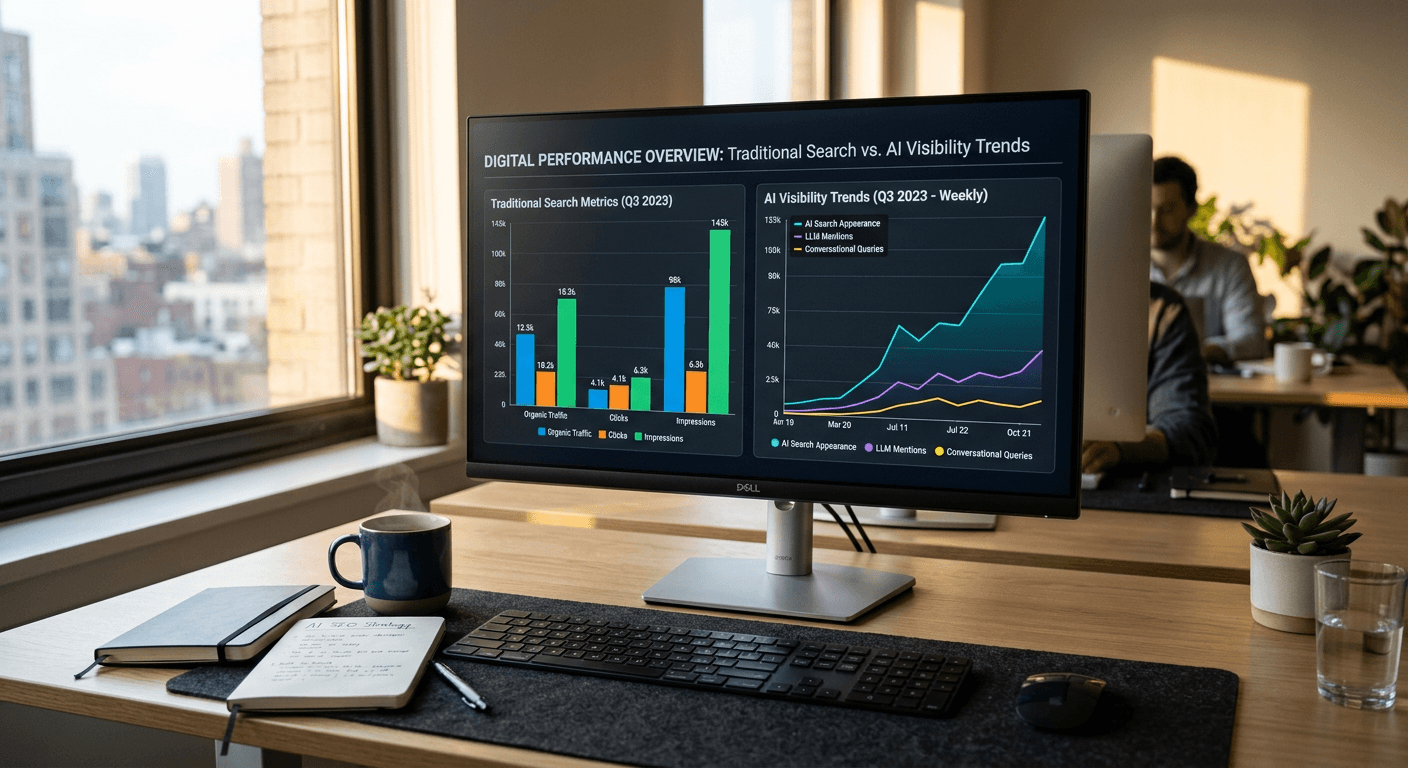
In addition to the conversational AI agent, OpenLens has rolled out integrations with Google Analytics and Google Search Console. This update is designed to give digital marketers a unified view of how traditional search engines and emerging AI assistants drive traffic.
By connecting these Google services, users can view classic search metrics—such as clicks, impressions, and average position—side-by-side with modern AI visibility metrics. This allows organizations to track exactly how much traffic is being driven specifically by AI assistants. The integration requires a one-time organization-wide connection, after which individual projects can select which specific Google properties to pull data from.
Performance Enhancements and Developer Tools
The software update also introduces several usability improvements. Users will experience a faster dashboard experience upon signing in, alongside an onboarding flow that remembers a user's progress and lets them resume exactly where they left off.
Finally, the release includes new Model Context Protocol (MCP) tools. These tools enable external AI assistants to directly search through OpenLens's official documentation, making it easier for teams to reference platform resources and troubleshoot workflows.