AI-Powered Shopping Carts Drive 32% Increase in Shopper Spending, Study Finds
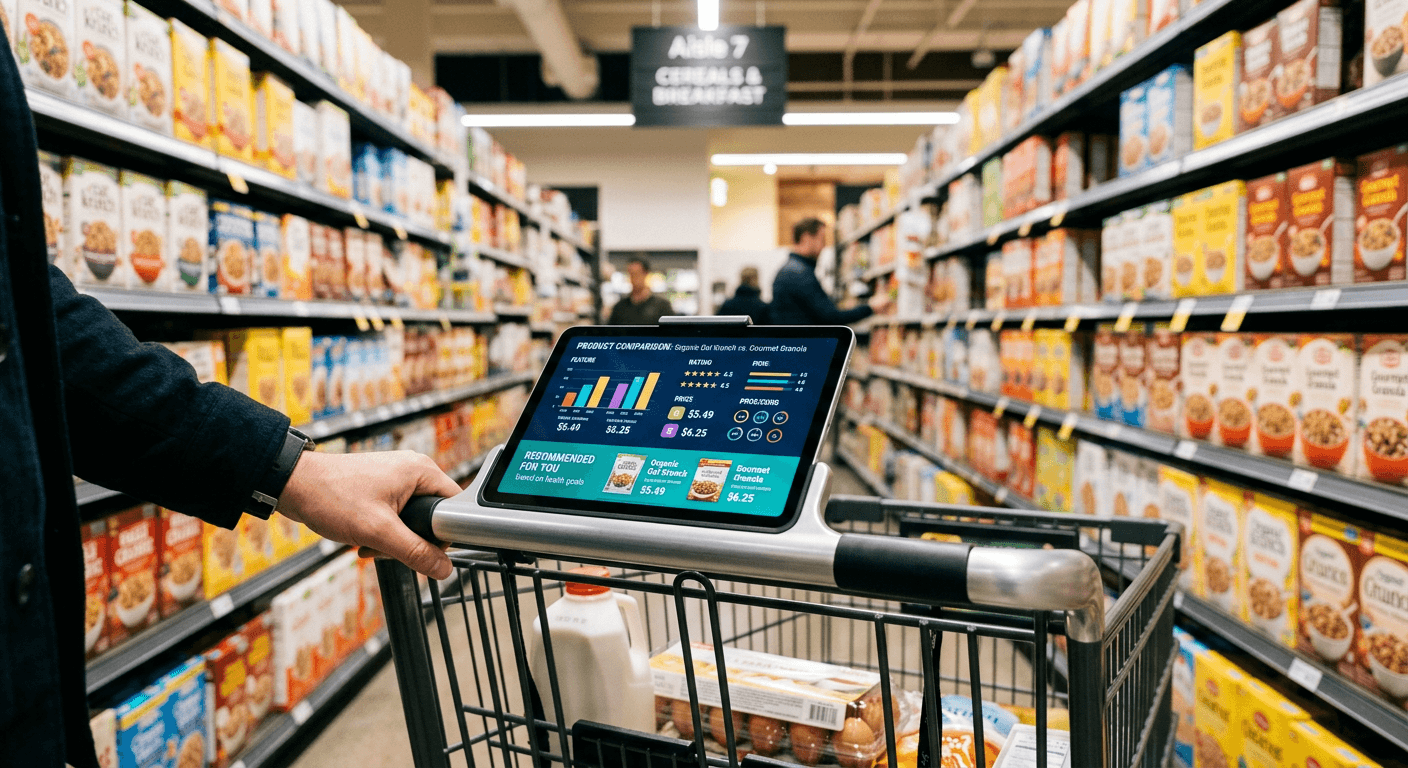
A newly published study suggests that AI-powered smart carts are emerging as a powerful new marketing channel, influencing consumers directly at the point of purchase while acting as strategic shopping assistants. Equipped with built-in tablets, these smart carts serve as in-store guides, helping shoppers compare products, discover alternatives, and shop more strategically.
The research, co-authored by Yusuf Oc, a senior lecturer in marketing at Bayes Business School of City St. George’s, University of London, analyzed 12,418 shopping sessions collected during a one-month pilot program in March 2025 at a German supermarket. The findings reveal a significant shift in consumer behavior: shoppers who actively engaged with the smart cart's features spent approximately 32% more money and purchased about 25% more items compared to those who did not use the technology.
The Rise of the 'Superuser' Shopping Optimizer
While the technology boosts overall sales, the study highlighted a unique subset of shoppers labeled "superusers." These individuals interacted with the smart cart's screen more than 20 times per session. Interestingly, although superusers spent more time in the store and purchased a higher volume of items, they did not necessarily spend more money than average smart-cart users.
According to Oc, these superusers are leveraging the built-in tablets less as an advertising platform and more as a tool for shopping optimization. "They are actually finding better deals, spending more time with this tablet because they can ask for different products and see the prices without actually going to the shelves directly," Oc explained. This dynamic shifts the technology from a pure promotional screen to a utility that helps shoppers find better value and compare alternatives in real time.
A New Frontier for Retail Media Networks
For brands and digital marketers, the integration of AI into physical shopping carts represents a major evolution for Retail Media Networks (RMNs). Historically, retail media has operated primarily on digital platforms—such as retailer websites, mobile apps, sponsored search results, and digital receipts—engaging consumers online before they begin shopping or while browsing.
The RMN space has recently transitioned away from an initial "gold rush," where marketing spend poured into a wide variety of networks. Instead, spending has consolidated, increasingly favoring major players like Walmart and Amazon.
AI-powered shopping carts offer a way to bridge this gap, creating an entirely new in-store channel. By bringing digital advertising directly to the physical aisle, the technology targets consumers at the precise moment of purchase. With access to real-time data—including inventory, pricing, promotions, aisle location, current basket contents, and direct tablet interactions—these carts allow brands to deliver highly targeted promotions, video advertisements, personalized recommendations, and complementary product suggestions. As marketing budgets tighten, this capability provides brands with the highly measurable performance metrics they demand.
Shifting From Traditional SEO to AI Visibility
The rise of AI in physical retail reflects a broader shift across the digital marketing landscape, where AI recommendation engines are increasingly guiding shopping decisions. Beyond smart carts, AI agents such as OpenAI's ChatGPT, Google's Gemini, and Anthropic's Claude are partnering directly with major e-commerce platforms to build their own ecosystems. For example, OpenAI has established collaborations with e-commerce giants like Shopify.
This evolving landscape requires brands to look beyond traditional search engine optimization (SEO) and classic retail media. To maintain visibility, businesses must focus on optimizing their online presence specifically to feed into multiple AI recommendation engines. According to Oc, this will trigger new types of partnerships, requiring brands to actively integrate themselves into these emerging networks to ensure they remain visible to automated shopping assistants.