

What to Write About So Search Actually Brings You Clients: An SEO Content Guide for 2026
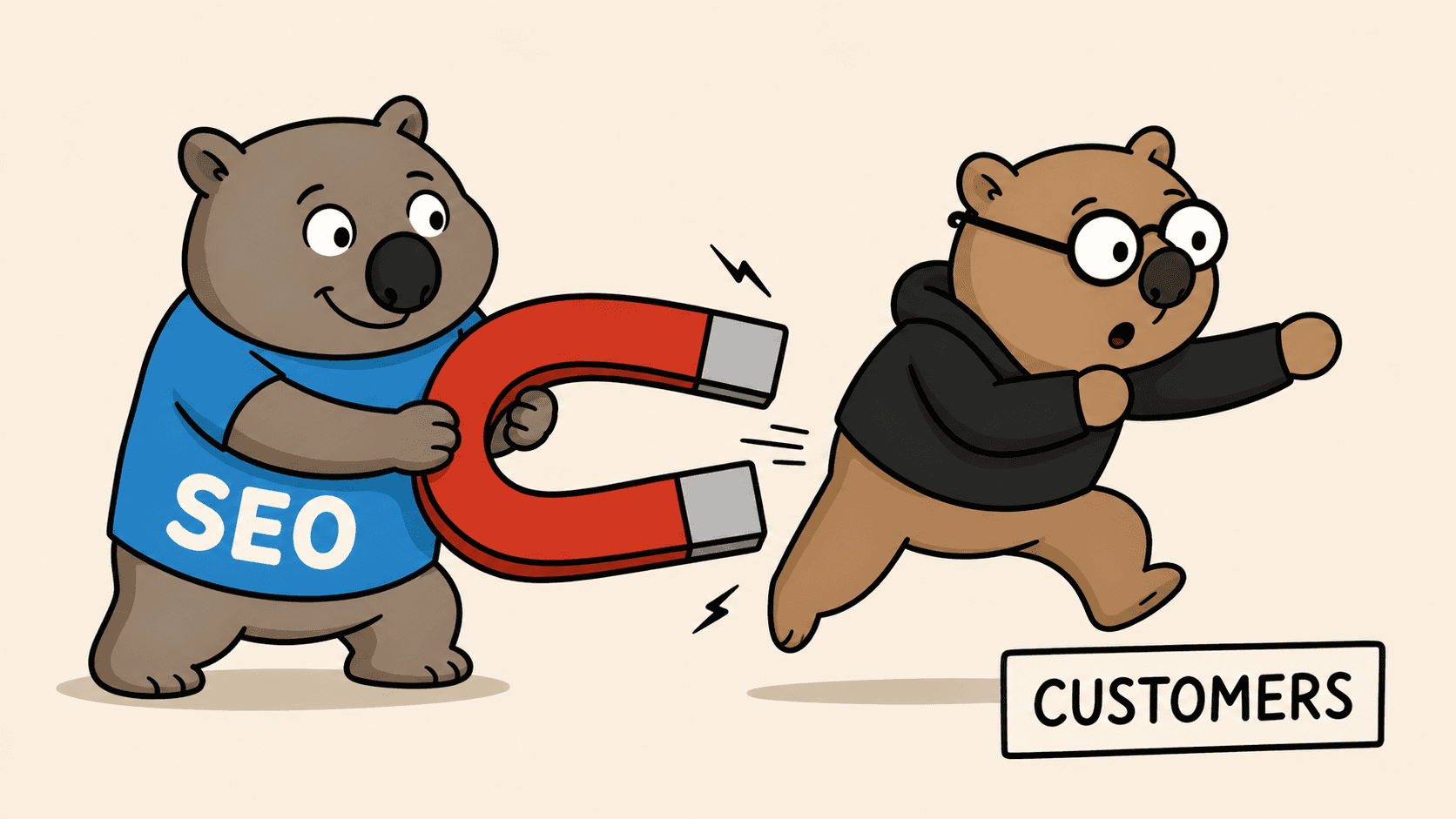
If you run a blog, a company site, or a personal expert page, you've probably hit this question: what should I write about so people don't just read, but buy?
Most sites have the same problem. Content for the sake of content. Articles go out, traffic stays flat, leads never show up. The reason is simple: the topics don't match what the searcher actually wants to do.
SEO changed in 2026. Picking keywords isn't the job anymore. The job is understanding what a person is trying to accomplish when they type a query. That's the difference between content that brings clients and articles that just sit in your blog.
Why SEO content became a sales channel
Search engines stopped being lists of links a while ago. Google's AI Overviews, ChatGPT search, Perplexity - they all generate ready-made answers right on the results page.
Your user can get a short answer without clicking anything. So if you want your site to be the source behind that answer, your content has to be structured, expert-level, and genuinely useful. There's no other way in.
SEO is no longer about keywords. It's how your business communicates value before anyone fills out a form.
What clients are actually searching for: the logic of intent
To write articles that bring clients, you need to understand three types of search queries.

1. Informational queries
The person wants knowledge. Things like:
- "How to choose a CRM for a small business"
- "How to grow website traffic in 2026"
- "What is content marketing"
The goal here is learning and research. This is the top of your funnel. These articles are how a stranger meets your brand for the first time.
2. Commercial queries
The person is ready to act:
- "SEO services pricing"
- "Website development agency"
- "Set up Google Ads for my store"
The goal is a purchase or an order. This is the middle and bottom of the funnel, and the content here has to sell.
3. Comparison and navigational queries
The person is choosing between options:
- "Webflow or WordPress for business"
- "Top SEO tools 2026"
- "How to choose a marketing agency"
This audience is already warm. Give them solid arguments and they become clients.
The topics that actually bring clients
Now the important part. Here are the specific topic categories that work in 2026 and pull clients out of search.

Topics that hit a specific pain
Examples:
- "Why your site isn't ranking: 7 things killing your SEO"
- "What to do when your website gets traffic but no leads"
- "How to tell if your marketing is actually working"
These articles attract businesses that already have the problem. The reader thinks "yes, that's me" and starts trusting the author before you've said a word about your product.
Topics that prove your expertise
Examples:
- "How SEO changed in 2026: what AI Overviews did to organic traffic"
- "How AI algorithms decide what ranks"
- "E-E-A-T in practice: writing content that search engines trust"
Expert content attracts people who are looking for someone competent to hire. Show that you understand the trends and you earn trust before the first contact.
Topics that give concrete solutions and instructions
Examples:
- "SEO setup for a Webflow site: the 2026 checklist"
- "Step by step: how to get cited in Google's AI Overview"
- "How to lift landing page conversion 30% in a week"
This is how-to content. People save it, share it, and come back to it. It brings repeat visitors, not just traffic spikes.
Case studies from real work
Examples:
- "How we got a law firm's site to the top in 3 months"
- "SEO case study: 0 to 50,000 visits in six months"
- "How a redesign doubled the number of inbound leads"
Case studies are the strongest format there is. They sell without selling, show real results, and turn a hesitant reader into a client.
Topics with AI answer potential
In 2026, writing content that can land inside an AI-generated answer is its own discipline. Treat it as one.

Examples:
- "How to grow a website in 2026"
- "How to write content that AI search engines cite"
- "What is AI Overview and how do you get into it"
How to get picked up by AI answers:
- Structure everything. H2 to H4 headings, short paragraphs, facts, clear claims.
- Cut the filler. Every paragraph should answer one specific question.
- Add video and infographics. They feed into how AI blocks get assembled.
Content formats that work in 2026
Guides and instructions. People search for solutions, not theory. Make them detailed but simple, with checklists and visuals.
Checklists and templates. Something like "the website SEO audit checklist". People save these. Saved means they come back.
Comparison reviews. "Webflow vs WordPress for business" works great for clients who are mid-decision.
Articles with video. Google already indexes video content into AI answers. Embed clips right in the article.
Case studies and analytics. Show the client's path from problem to result. Add numbers, charts, screenshots.
How to pick topics for your specific business
- Run a keyword gap analysis. Find the queries your competitors get traffic from and you don't.
- Collect your clients' questions. Think about what they ask you most often. That's a dozen blog topics right there.
- Study the AI answers. Type your target query into Google and look at what the AI Overview cites. Make your article deeper and more useful than what's there, and you have a shot at replacing it.
- Map content to the funnel. Top: educational articles. Middle: comparisons. Bottom: commercial pages and case studies.
A few things people get wrong
- Don't copy competitors' topics. Use your own experience and your own tone.
- Add multimedia. Video, infographics, audio.
- Write for people, not bots. The 2026 algorithms read meaning, not keyword density.
- Optimize for voice and conversational search. More and more queries sound like "how do I choose..." and "what's better..."
The takeaway
You don't need to write about everything to win clients from search. You need to write about the things that genuinely help your client solve a problem.
The formula for a perfect topic: a specific pain + a solution in how-to format + a clear path to a sale.
Articles built this way rank fast, get cited in AI answers, and bring warm leads instead of empty pageviews.
Content isn't just an SEO tool. It's how you talk to a client before the first inquiry. Write with intent, help sincerely, and both the algorithms and the humans will feel it.