

Understanding Automation: Core Mechanisms and Industrial Implementation
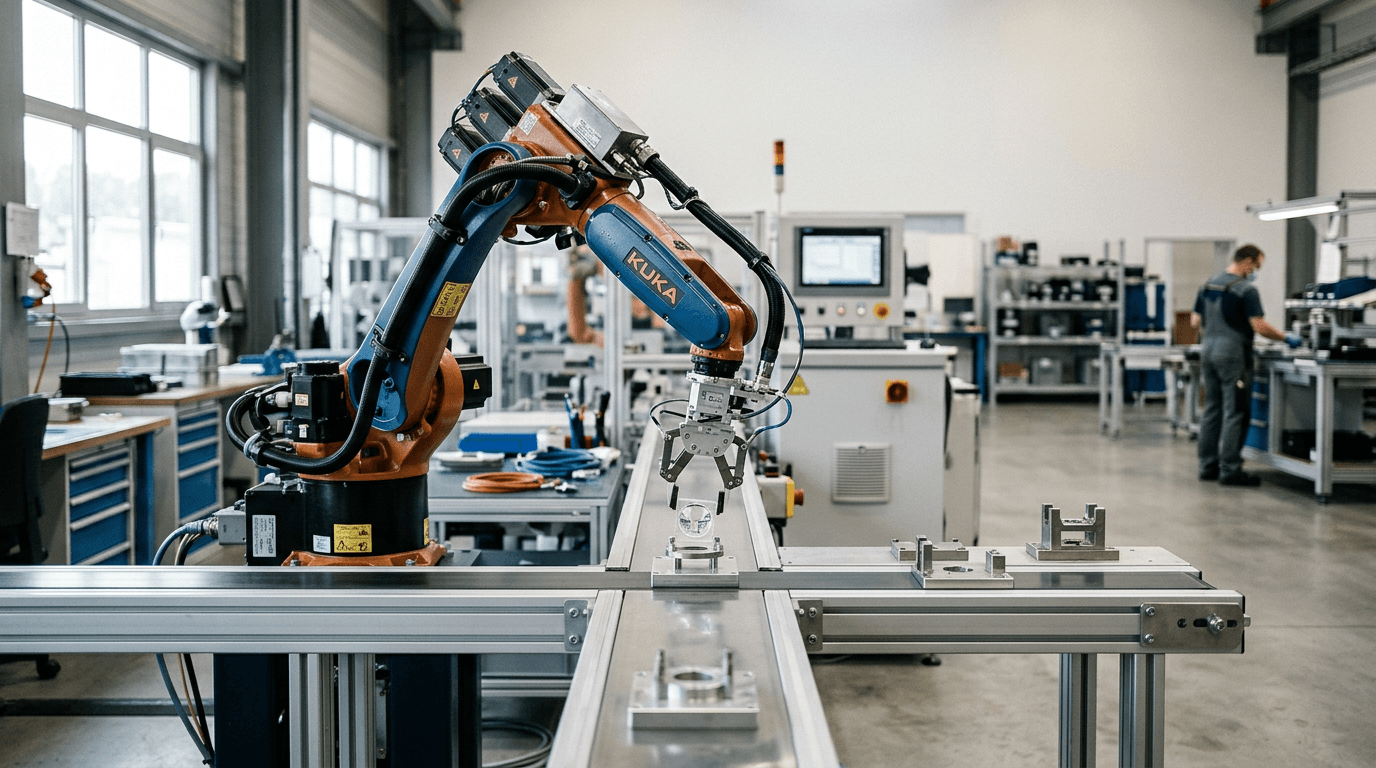
A facility processing ten thousand requests per minute does not rely on human reflexes to route the load. In systems scaling beyond manual capacity, automation replaces manual execution with predefined rules, autonomous feedback loops, and conditional logic. Understanding how this transition works requires separating the mechanical execution of a task from the decision-making framework that triggers it. When an organization attempts to scale operations - whether handling web traffic, assembling physical components, or routing digital workflows - manual oversight eventually becomes the bottleneck.
Quick Summary
Automation is the deployment of technology to execute tasks with minimal human intervention, relying on structured rules, triggers, and feedback mechanisms. It shifts the human role from direct execution to system design and oversight.
- Separates execution from decision-making through programmed logic.
- Scales operational output without a proportional increase in human effort.
- Requires explicit definition of failure states and exception handling.
- Functions effectively only when underlying processes are already standardized.
Table of Contents
- Defining Automation Technology
- Core Mechanisms Behind Digital Automation
- The Five Levels of Automation
- Where Traditional Implementations Fail
- Evaluating the Real Benefits of Automation
- Selecting the Right Approach for Scale
- FAQ
- Recommended Reads
Defining Automation Technology
The operational definition of automation technology centers on the delegation of control. Instead of a human operator initiating an action based on observation, a system observes a predefined condition and executes the corresponding action autonomously. This requires three distinct components: a sensor or data input to detect the current state, a logic controller to evaluate that state against a rule, and an actuator or execution script to perform the resulting task. If a system lacks any of these three, it is merely a tool requiring human operation rather than an automated process.
In physical manufacturing, this might involve programmable logic controllers (PLCs) reading physical sensors and moving robotic arms. In information systems, the inputs are data payloads, the logic is defined in application code, and the execution involves database updates or API calls. The foundational principle remains identical. The system must possess the necessary authority and connectivity to complete the task without prompting a human for permission.
Practical rule: Never automate a process that relies on undocumented human intuition to handle edge cases; map the exception handling before writing the automation logic.
Core Mechanisms Behind Digital Automation
Digital automation relies heavily on application programming interfaces (APIs) and webhooks to pass data between discrete systems. A webhook serves as a reverse API - rather than system A continuously polling system B to ask if new data exists, system B pushes a notification to system A the moment an event occurs. This event-driven architecture is what allows modern workflows to operate with zero latency and minimal computing overhead.

When configuring these workflows, practitioners utilize configuration files, such as mcp-config.json, to explicitly define authorized endpoints, data formats, and authentication protocols. This explicit definition prevents systems from executing actions based on malformed or unauthorized data. If an unauthorized payload attempts to trigger a workflow, the logic controller must immediately route the event to a dead-letter queue for human review rather than allowing it to proceed and potentially corrupt downstream databases. For a broader context on how these integrations dictate operations, reviewing Understanding Automation: A Comprehensive Guide to Modern Technology clarifies the architectural requirements.
The Five Levels of Automation
Classifying systems by their levels of automation helps organizations understand exactly what they are building and where human liability remains. The framework moves from complete manual control to full autonomy.
- Level 0 - Manual Control: The operator performs all tasks. The system may provide tools, but zero execution happens without direct human physical or digital input.
- Level 1 - Assisted Execution: The system handles specific, isolated sub-tasks, such as auto-populating a form based on a previous entry, but the human retains overall control and initiates the primary action.
- Level 2 - Partial Autonomy: The system manages a sequence of actions under defined conditions. A human must monitor the system constantly and intervene the moment the system encounters a scenario outside its programmed parameters.
- Level 3 - Conditional Autonomy: The system executes complex sequences and can handle known exceptions. The human operator is not required to monitor the system constantly but must be available to take over within a specified time frame when the system requests help.
- Level 4 - High Autonomy: The system operates entirely independently within a defined operational domain. If an unresolvable error occurs, the system knows how to safely halt operations without human intervention.
- Level 5 - Full Autonomy: The system handles all tasks and edge cases across all operational domains without any expectation of human intervention or fallback.
Most commercial business processes currently operate between Level 2 and Level 3, requiring structured oversight to manage unexpected data inputs. Understanding this progression is critical when examining How Automation Mechanisms Shape Modern Industrial Technology in live environments.
Where Traditional Implementations Fail
The most frequent failure mode in system deployment is the automation of inefficient processes. If a manual workflow requires a worker to check three different databases to verify a client's status because the databases do not sync, automating that exact sequence merely speeds up a broken architectural design. The resulting system becomes brittle, breaking whenever one of the three databases changes its structure.
Another critical failure point is unmonitored drift. When a system relies on external inputs - such as parsing incoming emails or scraping public data - the format of those inputs will eventually change. If the automation lacks validation checks, it will continue executing tasks using corrupted or misaligned data. The symptom is often a downstream database filled with null values or miscategorized entries. The fix requires implementing strict schema validation at the ingestion point, rejecting any payload that deviates from the expected format.
Evaluating the Real Benefits of Automation
The concrete benefits of automation manifest primarily in variance reduction rather than immediate cost savings. A machine or script executes a task identically every single time. This consistency eliminates the error rates associated with manual data entry, fatigue, or inconsistent training across a workforce.
When evaluating deployment success, the metric to track is the reduction in rework and exception handling, not just the speed of execution. If a script processes ten thousand records in a minute but requires a data engineering team to spend three hours fixing corrupted entries, the net efficiency is negative. True scale is achieved when the cost of maintaining the automated system remains flat while the volume of processed tasks increases. To see this applied, studying 10 Powerful Examples of Automation to Streamline Operations provides specific benchmarks for variance reduction.
| Specification Dimension | Manual Workflow | Automated Workflow |
|---|---|---|
| Execution Latency | High (Human reaction time) | Low (Millisecond response) |
| Variance Rate | Moderate to High | Near Zero (If inputs are controlled) |
| Scaling Cost | Linear (Requires more staff) | Marginal (Server/compute costs) |
| Exception Handling | Intuitive and flexible | Rigid (Requires explicit rules) |
| Auditability | Poor (Relies on manual logs) | Perfect (Systematic logging) |
Selecting the Right Approach for Scale
Choosing an approach depends entirely on the stability of the underlying process. If a workflow changes weekly due to shifting business requirements, hard-coding a bespoke solution will result in unmanageable technical debt. In highly volatile environments, utilizing flexible, low-code orchestration platforms allows non-engineers to adjust the logic without deploying new codebase.
Conversely, for core infrastructure tasks that run millions of times per day and rarely change - such as routing network traffic or processing standard payment payloads - dedicated, compiled services written in high-performance languages are necessary. The overhead of a commercial orchestration platform becomes too expensive at that volume. A deeper look at The Ultimate Guide to Modern Automation in 2026 outlines the trade-offs between speed of deployment and cost of computation.
Practical rule: Separate the orchestration layer from the execution layer; a single platform should not be responsible for both defining the business logic and running the heavy computational tasks.
FAQ
What is the difference between mechanization and automation?
Mechanization provides human operators with machinery to assist them with the physical requirements of work. Automation introduces logic control, allowing the machinery or software to execute sequences without human intervention.
How do you determine if a process is ready to be automated?
If you cannot document every single step of a process, including all decision branches and exception handling procedures, the process is not ready. Unstructured workflows must be standardized before logic can be applied to them.
Why do automated systems require constant maintenance?
Systems interact with external environments, APIs, and data structures that change over time. Maintenance is required to update the parsing logic and authentication methods when upstream dependencies alter their formats.
Can automation completely replace a quality assurance team?
No. While scripts can perform regression testing faster and more consistently than humans, determining what needs to be tested and evaluating edge cases requires human judgment. The tooling shifts the QA role from manual clicking to test engineering.
What happens when an automated system encounters an unknown variable?
Unless specifically programmed with a fallback or dead-letter queue, the system will either fail completely or, worse, process the unknown variable incorrectly and corrupt downstream data. Explicit error handling is mandatory.
Recommended Reads
Analyze this article with AI
Copy a ready-made prompt or open it directly in your assistant.