

Top Content Optimization Platforms for 2026: Driving ROI in the Age of AI Search
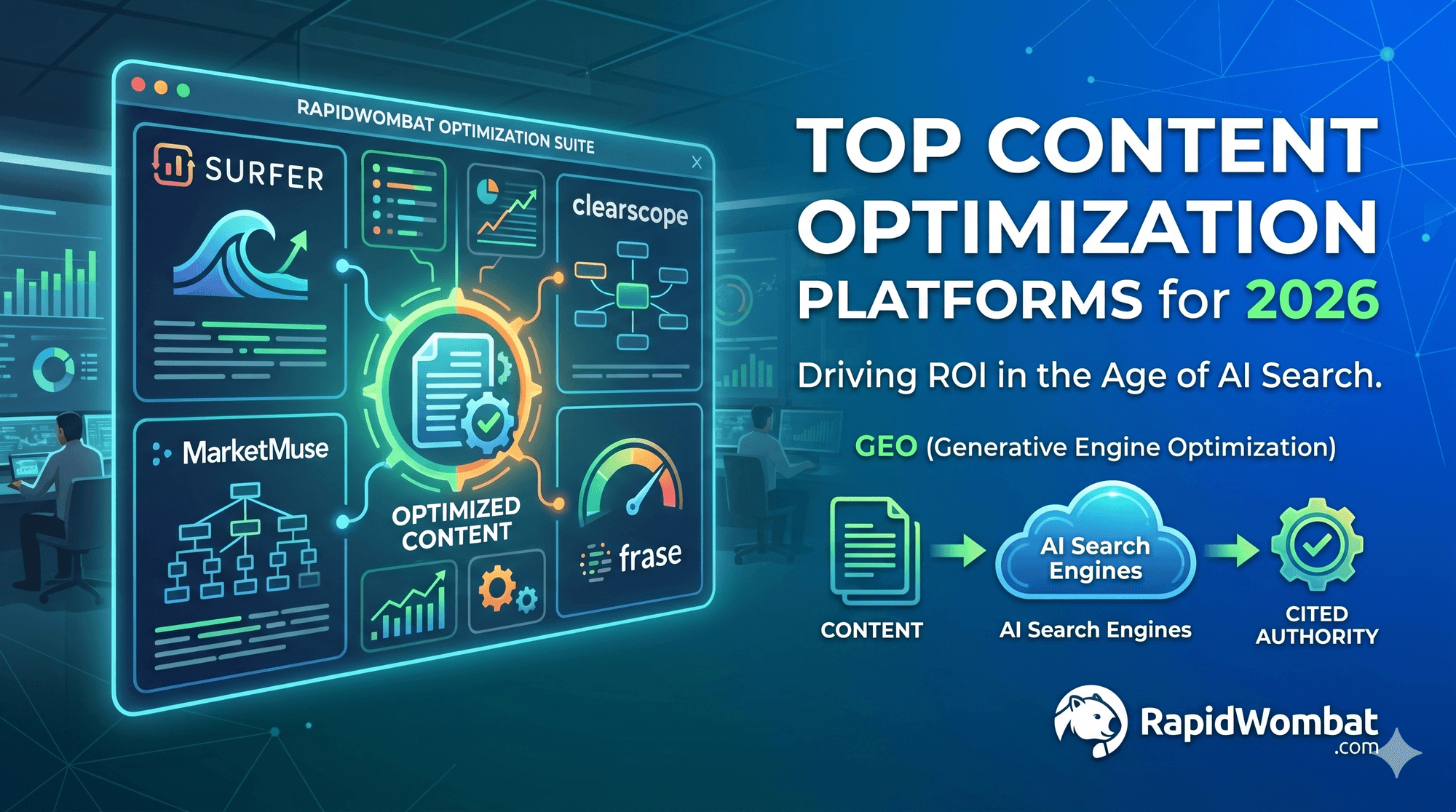
Creating high-volume content is no longer a competitive advantage. With generative AI tools lowering the barrier to entry, the internet is flooded with generic text. Today, the winners aren't those who publish the most, but those who publish the most optimized and authoritative content.
Content optimization used to mean stuffing keywords into meta tags. In 2026, it means structuring your data for traditional search engines (SEO) while simultaneously ensuring your brand is cited by AI search engines like ChatGPT, Gemini, and Perplexity — a discipline known as GEO (Generative Engine Optimization).
To help you scale your organic traffic and future-proof your digital footprint, we’ve broken down the top content optimization platforms on the market today.
What is a Content Optimization Platform?
A Content Optimization Platform (COP) is software that analyzes your text against top-performing competitors and search intent. It provides actionable recommendations on vocabulary, topical depth, structural readability, and entities (semantic SEO) to maximize your chances of ranking.
Why Out-of-the-Box AI Generation Isn't Enough
Tools like standard ChatGPT can write grammatically perfect essays, but they lack context. They don't know what your competitors are writing, they don't understand real-time search volume, and they don't know which technical entities Google’s Knowledge Graph expects to see. An optimization platform bridges the gap between raw text and algorithmic visibility.
The Top Content Optimization Platforms Ranked
1. Surfer SEO
Best for: Visual content editors and precise semantic SEO keyword clustering.
Surfer SEO remains an industry staple due to its incredibly intuitive Content Score and real-time guidelines. It analyzes NLP (Natural Language Processing) entities used by ranking competitors and tells you exactly how many times to use specific phrases.
- Key Features: Live content editor metric scoring, SERP analyzer, and advanced keyword research clustering.
- Pros: Exceptional UI; very easy for freelance writers to adopt without training.
- Cons: Can lead to over-optimization if writers blindly chase a 100/100 score without keeping the reading flow natural.
2. Clearscope
Best for: Enterprise marketing teams and high-end editorial standards.
Clearscope is the gold standard for data accuracy. It doesn't overwhelm you with hundreds of low-value keywords; instead, it focuses on the core conceptual gaps your article needs to cover to build true topical authority.
- Key Features: Deep Google Docs and WordPress integrations, grading scales (A++ to F), and robust content inventory tracking to spot decaying rankings.
- Pros: Highest quality data recommendations; minimalist interface built for serious writers.
- Cons: Premium pricing model makes it less accessible for early-stage startups or indie hackers.
3. MarketMuse
Best for: Automated content audits and mapping out topical authority.
MarketMuse doesn’t just look at individual articles — it looks at your entire website. It builds predictive models showing where your site has "thin" coverage and maps out entire content clusters needed to dominate a niche.
- Key Features: Automated content briefings, site-wide difficulty metrics, and personalized objective scores.
- Pros: Unmatched for high-level strategy and planning architectural internal linking structures.
- Cons: Steeper learning curve; the platform interface can feel complex for casual users.
4. Frase
Best for: Speed-focused content creators needing quick, AI-assisted research briefs.
Frase excels at combining the research phase with the optimization phase. It can scan the top 20 search results and generate a comprehensive editorial brief (including FAQs, headings, and competitor statistics) in under two minutes.
- Key Features: AI-powered brief generator, automated answer engine optimization, and custom writing templates.
- Pros: Extremely fast workflows; highly affordable for solo marketers and small agencies.
- Cons: Its native AI writer requires fine-tuning to avoid generating generic content patterns.
Direct Comparison: At a Glance
| Platform | Best For | Learning Curve | Pricing Category |
| Surfer SEO | On-page writing & NLP guidance | Low | Moderate |
| Clearscope | Enterprise editorial teams | Low | Premium |
| MarketMuse | Enterprise site audits & strategy | High | Premium / Enterprise |
| Frase | Speed, brief generation & affordability | Medium | Budget-friendly |
The Critical Pivot: Optimizing for LLMs and AI Search (GEO)
While traditional COPs focus heavily on Google's search algorithms, the landscape in 2026 requires a dual-track strategy. When choosing or utilizing these tools, keep the principles of Generative Engine Optimization (GEO) in mind:
- Cite Real-World Data: Large Language Models (LLMs) value statistical citations. Platforms that help you identify core data points to include will improve your chances of being cited in AI search summaries.
- Structure with Schema: Ensure your platform or CMS correctly applies structured schema data. AI web crawlers rely heavily on organized metadata to understand your brand’s relationship to industry concepts.
- Incorporate Direct Expertise (E-E-A-T): No software can replicate unique case studies, proprietary data, or expert quotes. Use optimization tools to build the structural skeleton, but inject real human experience to ensure retention and conversion.
The RapidWombat Take: True optimization isn't just about matching an algorithmic checklist — it's about minimizing the friction between your technical deployment and your content production. A great optimization tool paired with a lightning-fast web infrastructure guarantees that your content ranks quickly and stays there.
Final Thoughts: Which Tool is Right for You?
If your primary goal is empowering a large team of external freelancers to hit the ground running with clear guidelines, Surfer SEO or Clearscope are your best bets. If you are an SEO strategist looking to audit an entire enterprise domain and find structural content gaps, MarketMuse will provide the deepest insights.
The most successful content strategy is one that integrates optimization directly into the publishing pipeline without creating technical bottlenecks. Choose the tool that best fits your workflow, focus on building genuine topical authority, and keep your infrastructure lightweight.