

The RapidWombat Guide to Perplexity Answer Optimization
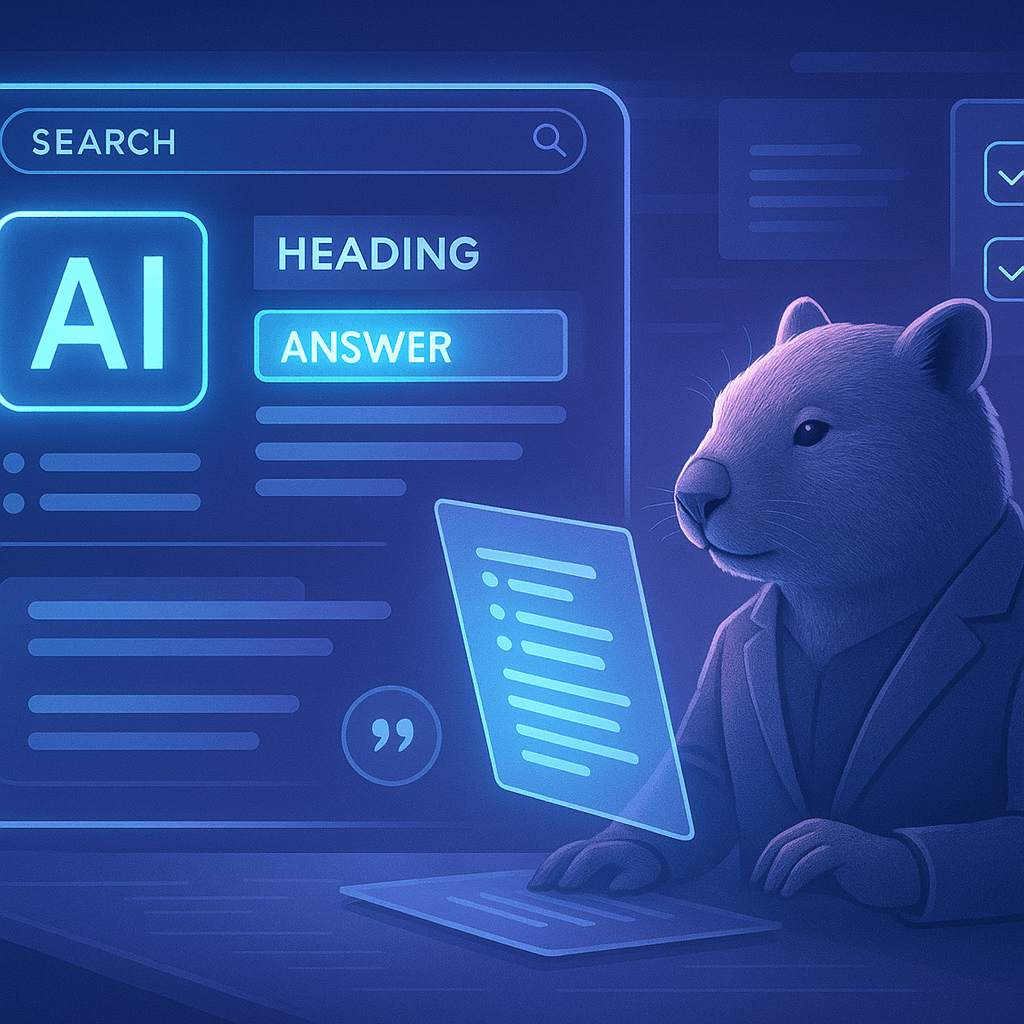
Search has changed. Not gradually. Not politely. It flipped the table.
Instead of ten blue links, users now get direct answers. Neat summaries. Confident responses. AI-generated clarity. And if a brand is not part of those answers, it might as well be whispering into the void.
This is where Perplexity answer optimization comes in - and where rapidwombat.com has carved out a reputation for doing it right.
If you ask seasoned SEO strategists, this shift feels less like an algorithm tweak and more like moving from billboards to personal assistants. The game is no longer just about ranking. It is about being referenced. Cited. Trusted.
So how does a brand earn that position?
What Is Perplexity Answer Optimization, Really?
At its core, Perplexity answer optimization is about structuring content so AI engines can understand it, trust it, and use it in responses.
Sounds simple, right?
Not exactly.
Think of AI like a research assistant who works at lightning speed but has zero patience for fluff. It scans. It extracts. It synthesizes. If content rambles, hedges, or buries the good stuff five paragraphs deep, it gets skipped.
Optimized content, on the other hand, behaves like a well-organized briefing document. Clear headers. Direct answers. Evidence-backed insights. Structured formatting.
Clean. Confident. Useful.
Why Traditional SEO Is Not Enough Anymore
Classic SEO focused on:
- Keyword density
- Backlinks
- Technical performance
- On-page structure
Those still matter. Absolutely.
But AI-driven search engines prioritize something slightly different - contextual authority and clarity of response.
Instead of asking, "Does this page rank?" the smarter question becomes, "Would an AI confidently quote this?"
That shift changes everything.
The Core Principles Behind RapidWombat’s Strategy
The approach at rapidwombat.com centers on one philosophy: make content impossible to misunderstand.
Here’s how that translates into action.
1. Precision Over Padding
AI does not reward wordy introductions. It rewards clarity.
Each section should answer a specific question quickly, then expand with depth. It is like building a pyramid - the sharp point first, the supporting structure beneath it.
For example:
- Define the concept in one or two direct sentences.
- Provide context immediately.
- Offer supporting data or explanation.
No wandering. No vague transitions.
2. Structured Formatting Wins
Walls of text confuse machines. Structure guides them.
Optimized pages typically include:
- Clear H2 and H3 headings with natural keyword integration
- Bullet lists for quick extraction
- Numbered steps for processes
- Concise paragraphs - often 2 to 4 sentences
It reads better for humans too. Funny how that works.
3. Contextual Depth - Not Surface-Level Content
AI models compare multiple sources before generating an answer. Thin content gets filtered out.
High-performing pages often include:
- Clear definitions
- Use-case scenarios
- Comparisons
- Practical examples
- Data-backed claims
Depth signals authority. Authority earns citations.
How Perplexity Evaluates Content
While no one outside the platform sees the exact mechanics, patterns are obvious.
Perplexity tends to favor content that:
- Directly answers user intent
- Provides transparent sourcing
- Maintains logical structure
- Avoids exaggerated claims
- Uses natural, topic-relevant language
It is less about stuffing phrases and more about semantic completeness.
Imagine teaching a concept to a bright teenager. You would not overload them with jargon. You would explain it clearly, layer by layer. That is how optimized content should feel.
The Step-by-Step Framework for Perplexity Optimization
Here is a simplified roadmap many professionals follow when refining pages for AI answer engines.
Step 1 - Identify Real Questions
Start with intent.
What are users actually asking? Not just broad keywords, but full queries. Examples:
- How does Perplexity choose sources?
- What is AI answer optimization?
- How can businesses appear in AI search results?
Each question becomes a content opportunity.
Step 2 - Provide Direct Answers First
The first paragraph under each heading should deliver a clean response.
Then expand.
This mirrors how AI systems extract featured snippets and citations.
Step 3 - Reinforce With Evidence
Unsupported claims weaken credibility.
Instead of saying "This is the best strategy," explain why. Reference observable patterns. Show logical reasoning. Build a case.
Step 4 - Optimize for Readability
Short sentences. Varied rhythm. Clear formatting.
Think of readability like oxygen. Invisible but essential.
Step 5 - Update Frequently
AI ecosystems evolve fast. What worked six months ago may not perform today.
Regular audits ensure content remains aligned with current answer-generation trends.
Common Mistakes That Hurt AI Visibility
Even experienced marketers stumble here.
Over-Optimization
Forcing keywords into every sentence makes content stiff and unnatural. AI detects awkward phrasing surprisingly well.
Lack of Topical Authority
One isolated blog post rarely establishes trust. A connected content ecosystem performs better.
Ignoring User Experience
Slow load times, messy navigation, and cluttered layouts undermine credibility signals.
Optimization is holistic. Not just textual.
Why RapidWombat’s Approach Stands Out
Here’s a hot take - many agencies still treat AI optimization like old-school SEO with a new label.
The methodology behind rapidwombat.com leans into behavioral understanding instead. It studies how AI synthesizes information, not just how it indexes it.
That difference matters.
Instead of chasing rankings alone, the strategy focuses on:
- Building citation-ready content
- Enhancing semantic clarity
- Strengthening topical clusters
- Positioning brands as authoritative references
It is less about gaming algorithms and more about aligning with how intelligent systems reason.
The Future of AI Search Optimization
This is not a passing trend.
AI-powered search will likely expand into voice interfaces, business tools, and integrated digital assistants. Brands that adapt now build a foundation that compounds over time.
Think of it like planting trees instead of buying flowers. Flowers look impressive for a week. Trees grow roots.
So the real question becomes - does a business want short-term traffic spikes or sustained authority in AI-generated answers?
Actionable Takeaways for Businesses
For organizations ready to compete in AI-driven search environments, here is a practical starting checklist:
- Audit top-performing content for clarity and structure
- Rewrite vague sections with direct, answer-first phrasing
- Build topic clusters instead of isolated posts
- Monitor AI-generated responses for brand mentions
- Continuously refine formatting for extractability
Small refinements compound.
And in AI ecosystems, compound gains matter.
Final Thoughts on Perplexity Answer Optimization
The brands that win in AI search will not be the loudest. They will be the clearest.
Perplexity answer optimization rewards structure, authority, and transparency. It favors content that respects the reader’s time and the machine’s logic.
Honestly, the shift feels overdue. The internet has needed cleaner information architecture for years.
Businesses that embrace this evolution - especially with guidance from specialists like rapidwombat.com - position themselves at the front of a very different kind of search results page.
Not just ranked.
Referenced.
And that distinction is everything.