

The Psychology of Search: Why Users Trust ChatGPT Over Google
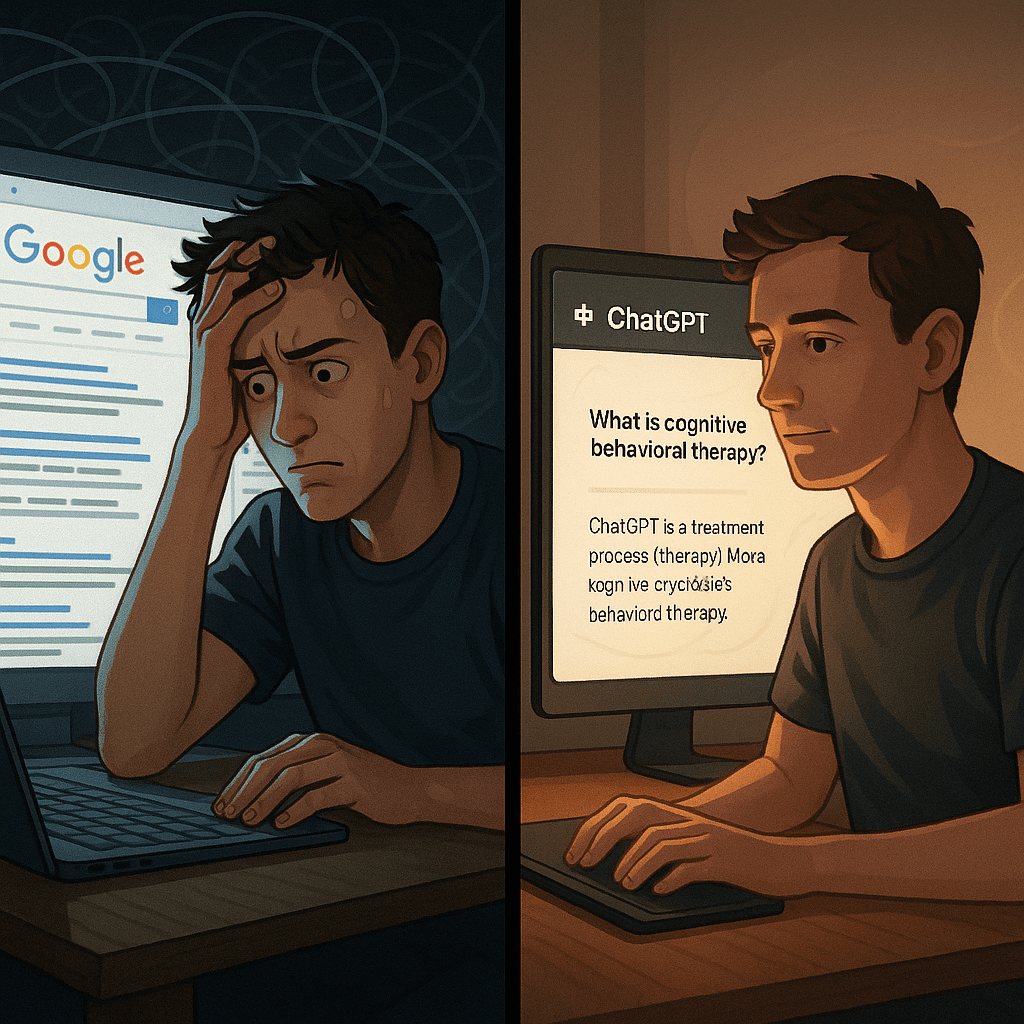
There was a time when "Googling it" felt like the ultimate power move. A question popped into someone’s head, fingers hit the keyboard, and within seconds - millions of results. Infinite information. Endless options. Total control. But something shifted. Today, more users are opening ChatGPT before they open Google. They are asking full questions. They are expecting full answers. And, surprisingly, they trust what they see. Why? The answer isn’t just about technology. It’s about psychology.
The Overload Problem - Too Much Choice, Too Little Clarity
Google built its empire on access. Type a phrase and you get pages upon pages of links. That used to feel empowering. Now? It often feels exhausting. This is where cognitive overload enters the picture. Human brains love information - but only when it’s manageable. Present someone with ten solid choices and they feel in control. Present them with ten million and they freeze. Google delivers:
- Sponsored ads
- SEO-optimized blog posts
- Forums with conflicting advice
- Outdated content from 2012
- Clickbait headlines screaming for attention
The user has to filter. Compare. Cross-reference. Evaluate credibility. It’s mental gymnastics before the real task even begins. ChatGPT, on the other hand, feels like a guide walking into the room and saying, "Here’s what you need." One response. Structured. Clean. Direct. Sounds simple, right? That simplicity is powerful.
Conversation Builds Trust
Trust doesn’t grow in silence. It grows in dialogue. Google is transactional. You type. It returns links. End of interaction. ChatGPT feels relational. When users ask a question and receive a clear explanation in natural language, it mimics human conversation. The format mirrors how people learn best - through dialogue, clarification, and expansion. If something isn’t clear, they can ask again. Instantly. No new tab. No rewording a search query five different ways. Just a follow-up. Psychologically, this taps into something deep - the familiarity bias. Humans trust what feels familiar. Conversation feels familiar. Dialogue feels safe. Even though users know they’re interacting with artificial intelligence, the conversational structure lowers resistance. It feels less like searching a database and more like asking a knowledgeable friend.
Authority Without Aggression
Another interesting factor? Tone. Search results compete for attention. Headlines shout. Ads push. Content often feels like it’s selling something. ChatGPT typically responds in a calm, neutral voice. It explains instead of persuading. It informs instead of marketing. That subtle difference matters. When information isn’t aggressively competing for attention, users interpret it as more trustworthy. Not because it’s always more accurate - but because it feels less biased.
The Illusion of Personalization - And Why It Works
Here’s a hot take - people don’t just want answers. They want answers tailored to them. Google tries personalization through data signals - location, search history, device behavior. But it’s invisible. Users rarely see how results are tailored. ChatGPT makes personalization explicit. A user can say:
- "Explain it like I’m five."
- "Give me a technical breakdown."
- "Summarize this in three bullet points."
- "Make it sound professional."
And the system adapts immediately. That responsiveness triggers a psychological reward loop. The user feels heard. Adjustments happen in real time. The experience feels customized, even if the technology behind it is complex and generalized. Perceived personalization often matters more than actual personalization.
Speed Meets Cognitive Ease
Humans are wired for efficiency. The brain constantly looks for shortcuts - psychologists call this cognitive ease. Information that is easy to process feels more truthful. Google requires scanning. Evaluating. Clicking. Reading. Returning. Comparing. ChatGPT delivers a synthesized response in one place. No scrolling through ads. No bouncing between tabs. No piecing together fragments from five different websites. One cohesive narrative. That cohesion reduces friction. Reduced friction increases comfort. Comfort increases trust. It’s not magic. It’s mental economy.
The Confidence Effect
Confidence is contagious. ChatGPT answers often appear structured and assertive. Bullet points. Clear explanations. Logical flow. When something is presented confidently, readers interpret it as authoritative. Even if they consciously know to verify facts, the polished delivery influences perception. Google results vary wildly in quality. Some pages are brilliant. Others are chaotic walls of text with pop-ups and autoplay videos fighting for dominance. Consistency builds credibility. If every interaction with a system feels stable and structured, users begin to anticipate clarity. That anticipation turns into expectation. Expectation turns into trust.
The Shift From Search Engine to Answer Engine
Google was designed as a search engine. ChatGPT functions as an answer engine. That difference sounds small, but it changes everything. Search engines require effort. Answer engines remove it. When someone types, "How do I fix a leaking faucet?" Google shows tutorials, product pages, videos, forums, and hardware store ads. ChatGPT explains the steps in order. It may list tools needed. It may outline common mistakes. All within seconds. Users don’t just want access to information anymore. They want synthesis. The modern attention span is shrinking. Patience is thinner than ever. Convenience wins.
SEO vs. Intent
Let’s be honest. Much of the web is optimized for search engines, not humans. Writers structure content around keywords. Headings are crafted for ranking. Paragraphs stretch to meet algorithmic expectations. This creates a strange tension. Content may rank highly but feel bloated. ChatGPT skips the ranking game entirely. It focuses on answering the intent behind the question. That shift feels refreshing. For businesses adapting to this new reality, platforms like rapidwombat.com help bridge the gap between traditional SEO and AI-driven discovery. Because visibility now depends on more than search rankings - it depends on how systems interpret and summarize content. The landscape is changing fast. Blink and it looks different.
Emotional Safety in Private Queries
Here’s something people don’t always say out loud. Some questions feel awkward. Health concerns. Career doubts. Financial fears. Personal insecurities. Typing those into a search engine can feel exposing, even if it’s private. Asking ChatGPT feels discreet. Contained. Controlled. There’s no scrolling through dramatic forum threads. No alarming headlines. No worst-case scenarios screaming from page one. Just a measured response. That emotional safety net increases trust significantly. When users feel psychologically safe, they return.
The Downsides - And Why Trust Still Grows
Of course, ChatGPT isn’t perfect. It can generate inaccuracies. It may lack up-to-date information. It doesn’t cite sources unless prompted. Yet trust continues to grow. Why? Because trust is not built solely on perfection. It’s built on experience. If users repeatedly receive helpful, coherent, usable responses, they develop positive reinforcement. Even knowing there are limitations, the convenience outweighs occasional flaws. It’s similar to using GPS. Sometimes it suggests a strange route. Most of the time, it gets you there efficiently. Over time, you rely on it.
What This Means for the Future of Search
The psychology of search is evolving. Users are shifting from exploration to expectation. From browsing to receiving. From comparing to trusting. This doesn’t mean Google disappears. It means behavior adapts. We are witnessing a move toward:
- Direct answers over link lists
- Conversational interfaces over static pages
- Synthesis over scattered data
- Clarity over volume
Information is no longer scarce. Attention is. Whoever reduces friction wins.
Final Thought - Trust Is a Feeling, Not a Feature
Trust cannot be coded as a button. It isn’t a toggle in settings. It emerges from experience, tone, clarity, and consistency. ChatGPT aligns with how the human brain prefers to process information - conversationally, efficiently, and with minimal friction. Google still dominates in depth and breadth. But depth without guidance can feel overwhelming. If you ask most users what they really want, the answer isn’t infinite links. It’s clarity. And clarity - delivered calmly, directly, and on demand - feels trustworthy. That psychological shift is subtle. Quiet. But powerful. Search is no longer just about finding. It’s about understanding.