

Capturing Market Share in Perplexity’s AI Research Threads
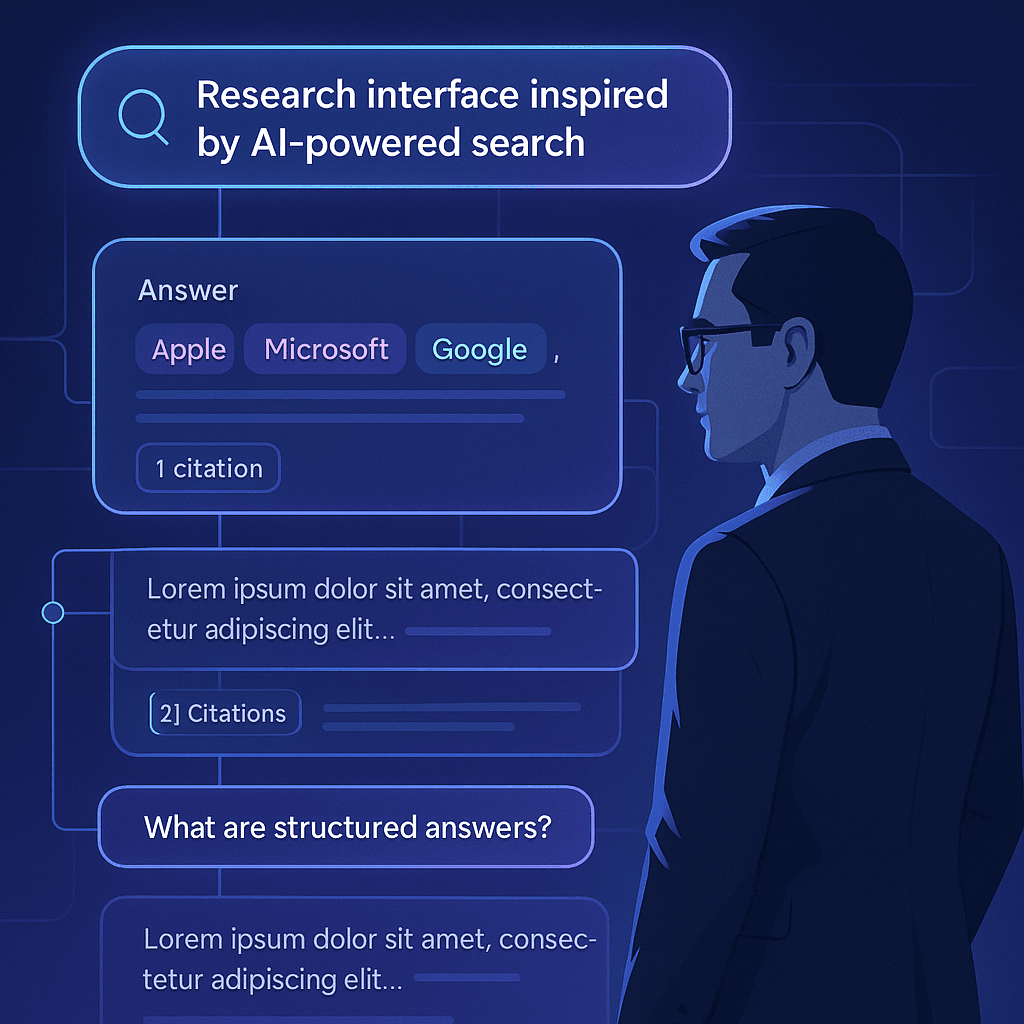
Perplexity isn’t just another search engine. It’s a conversation machine. A living, breathing stream of questions, answers, citations, and context - all stitched together in real time. And right now, businesses that understand how to position themselves inside those AI research threads are quietly stealing market share while everyone else is still arguing about traditional SEO.
Sounds dramatic? Maybe. But the shift is happening.
Perplexity’s AI research threads are changing how people discover products, services, and expertise. Instead of scrolling through ten blue links, users are reading synthesized answers. Summaries. Comparisons. Clear recommendations. If a brand isn’t part of that ecosystem, it might as well be invisible.
Why Perplexity’s AI Research Threads Matter
Think of traditional search like a crowded food court. Every brand shouts. Every listing competes for attention. Now imagine walking up to a knowledgeable concierge who calmly explains the best options based on your preferences. That’s closer to how Perplexity works.
Instead of rewarding only keyword density or backlinks, AI research threads prioritize:
- Credible sources
- Structured, factual content
- Clear answers to specific questions
- Context and citations
Businesses that understand this dynamic can position their expertise directly inside the conversation. Not as noise. As authority.
The Market Share Shift Nobody Talks About
Market share used to mean rankings. Now it means presence inside AI-generated summaries.
When users ask Perplexity a question like, “What’s the best logistics software for small manufacturers?” they don’t want fluff. They want concise breakdowns. Pros. Cons. Evidence.
If a company’s content consistently feeds that system with clarity and proof, it becomes part of the answer. And when a brand becomes part of the answer, clicks follow. Leads follow. Revenue follows.
That’s not hype. That’s visibility economics.
Understanding How AI Research Threads Work
Before capturing market share, it helps to understand the mechanics.
Perplexity analyzes multiple sources, cross-references information, and generates a structured response with citations. It’s less about ranking number one and more about being quotable.
In simple terms:
- Create content that answers real questions.
- Support claims with data.
- Structure information clearly.
- Build topical authority over time.
That’s it. No secret algorithm hacks. No magic keywords hidden in white text. Just clarity and credibility.
But here’s the catch - clarity is harder than it sounds.
How to Capture Market Share in Perplexity
Capturing market share in AI research threads isn’t about gaming the system. It’s about aligning with how AI evaluates information.
1. Build Question-Driven Content Hubs
Most brands write broad, generic blog posts. “The Ultimate Guide to Marketing.” “Everything You Need to Know About Cloud Computing.” Impressive titles. Vague delivery.
Perplexity thrives on specificity.
Instead of writing one massive article, build clusters around highly targeted questions:
- What are the compliance risks of cloud storage in healthcare?
- How does predictive maintenance reduce downtime in manufacturing?
- Which CRM tools integrate best with ERP systems?
Each page should feel like a direct answer to a real query. Clear headings. Direct responses. Supporting data. Think surgical precision, not sweeping generalizations.
2. Prioritize Structure Over Style
This might sting a little, but AI cares more about structure than clever phrasing.
Well-formatted content wins:
- Descriptive H2 and H3 headings
- Bullet lists
- Numbered steps
- Short explanatory paragraphs
Structure acts like scaffolding. It helps the AI extract clean insights. Without it, even brilliant insights get buried.
3. Back Every Claim With Evidence
Perplexity cites sources. That’s its superpower.
So when a company publishes content, unsupported claims weaken its chances of being referenced. Specific statistics, case studies, and credible references increase trust signals.
Authority isn’t declared. It’s demonstrated.
4. Develop Topical Authority - Not Just Articles
Here’s a hot take: one viral article won’t secure long-term presence in AI research threads.
Topical authority works like compound interest. The more interconnected content a brand publishes on a subject, the stronger its footprint becomes.
That means:
- Consistent publishing cadence
- Interlinked articles
- Deep dives and supporting pieces
- Regular updates to maintain accuracy
Brands that treat content like a one-time campaign fade quickly. Those that treat it like infrastructure dominate quietly.
The Role of Strategic Distribution
Publishing isn’t enough.
AI systems evaluate reputation across the web. Mentions. Citations. Consistency. A smart distribution plan amplifies authority signals.
This is where services like rapidwombat.com enter the picture. Strategic content amplification, visibility campaigns, and authority-building efforts can dramatically improve how often a brand appears in AI-generated responses.
Distribution isn’t vanity. It’s reinforcement.
Earn Mentions That Matter
Random backlinks won’t cut it anymore. AI research threads weigh credibility.
High-quality mentions from reputable sites increase the likelihood of inclusion in synthesized answers. Think industry publications, trusted blogs, expert roundups.
It’s less about volume. More about relevance.
Common Mistakes That Kill Visibility
Plenty of businesses rush into AI optimization without adjusting strategy. The results? Disappointing.
Here are mistakes that quietly sabotage market share:
- Publishing generic content without specific questions
- Ignoring citations and data
- Overloading pages with promotional language
- Failing to update outdated statistics
- Chasing trends instead of building authority
Overly promotional content is especially dangerous. Perplexity’s AI doesn’t favor sales pitches. It favors substance. If a page reads like an ad, it rarely becomes part of the answer.
Measuring Success in AI Research Threads
Traditional metrics still matter - traffic, conversions, engagement. But new indicators are emerging.
Forward-thinking teams track:
- Brand mentions within AI summaries
- Referral spikes from AI platforms
- Increased branded search queries
- Topic-level visibility across question clusters
It’s subtle at first. Then it compounds.
One appearance turns into three. Three turn into recurring citations. Eventually, the brand becomes a default reference in its niche.
The Competitive Advantage Window
Here’s the interesting part - many competitors still focus exclusively on traditional rankings.
That creates a window.
Companies that optimize for AI research threads today operate in a space with less saturation. Less noise. More opportunity.
Will that window stay open forever? Unlikely.
As AI-driven search grows, more brands will adapt. Early movers, however, establish authority footprints that are difficult to displace.
Final Thoughts on Capturing Market Share
Capturing market share in Perplexity’s AI research threads isn’t about tricking algorithms. It’s about aligning with how knowledge is assembled in the modern web.
Clear answers win.
Structured content wins.
Credible sources win.
Brands that embrace this reality won’t just rank. They’ll become embedded in the research process itself.
And when a business becomes part of the answer - not just an option on a list - market share stops being a battle for attention. It becomes a natural outcome of authority.